- 問題
- 解説
- 第1段落
- Telling stories is an activity that has been with human beings from the beginning of time.
- We might go so far as to say we are story-telling animals born with narrative instinct.
- We go to work in the morning, see our officemates, and tell them what happened on the previous night; we go home in the evening, see our family, and tell them what happened during the day.
- We love to tell stories and we love to listen to them.
- Narrative is everywhere: news, gossip, dreams, fantasies, reports, confessions, and so on and so forth.
- 第2段落
- In particular, we spend a deal of time consuming all kinds of fictional narratives, such as novels, cartoon stories, movies, TV serials.
- Surely it will be of some use to ponder whether fiction is good for us or not.
- Indeed, this is a problem with a long history going back to ancient philosophers.
- Plato famously excluded poets from his ideal republic, for he thought their creations were ultimately untrue.
- Put in the simplest terms, he regarded poems as lies.
- He did not believe something offered as fiction could justify itself.
- His brightest pupil Aristotle thought differently.
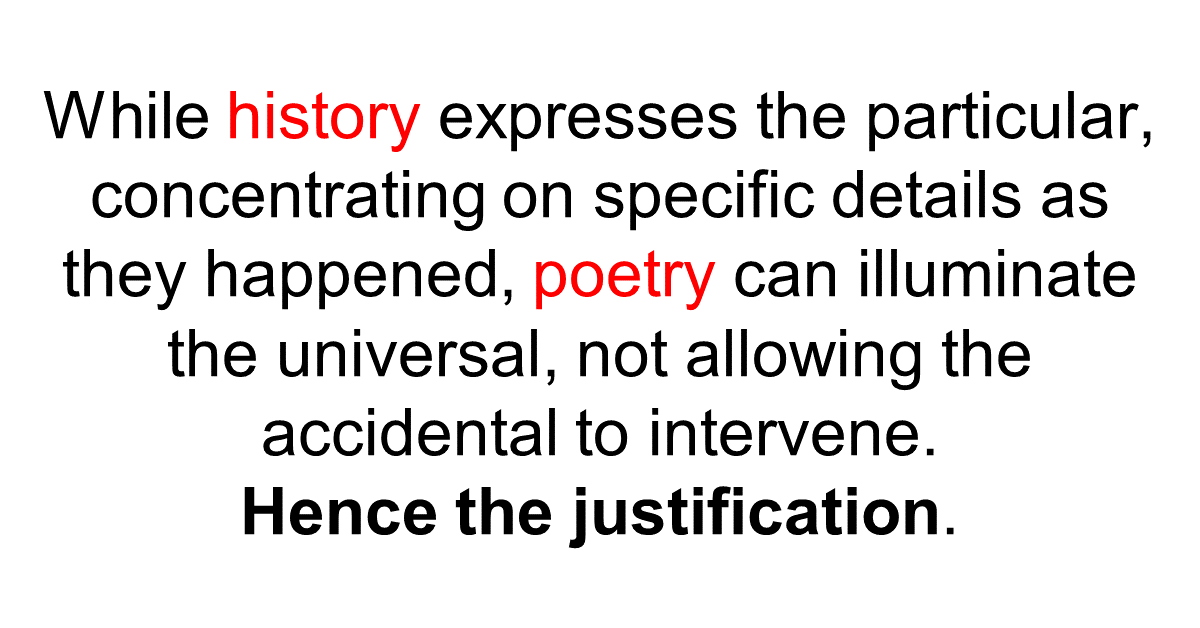
- One major point of Aristotle’s theory is said to be: while history expresses the particular, concentrating on specific details as they happened, poetry can illuminate the universal, not allowing the accidental to intervene.
- Hence the justification.
- 第3段落
- As the debate continues to the present time, researchers in psychology have shown us a new way of dealing with this old problem.
- From various experiments, it emerges that fiction has the power to modify us.
- Reportedly, “when we read nonfiction, we read with our shields up.
- We are critical and skeptical.
- But when we are absorbed in a story, we drop our intellectual guard.
- We are moved emotionally, and this seems to make us rubbery and easy to shape.”
- This might sound rather simplistic, but importantly, researchers are attempting to tell us that reading fiction cultivates empathy.
- When a reader is immersed in the fictional world, she places herself in the position of characters in the narrative, and the repeated practice of this activity sharpens the ability to understand other people.
- So, nurturing our interpersonal sensitivity in the real world, fiction, especially literary fiction, can shape us for the better.
- 第4段落
- Although this is not exactly news, it is surely comforting to have scientific support for the importance of fiction.
- Nevertheless, a careful distinction is in order here.
- It may be true that fiction actually makes one behave with better understanding towards the people around one.
- Empathy, however, does not necessarily lead to social good.
- A recent article on the topic points out:
- “Some of the most empathetic people you will ever meet are businesspeople and lawyers.
- They can grasp another person’s feelings in an instant, act on them, and clinch a deal or win a trial.
- The result may well leave the person on the other side feeling anguished or defeated.
- Conversely, we have all known bookish, introverted people who are not good at puzzling out other people, or, if they are, lack the ability to act on what they have grasped about the other person.”
- (Here bookish people are, we are meant to understand, keen readers of fiction.)
- Empathetic understanding and sympathetic action are different matters — how and why they are so, in connection with reading fiction, will be further explored by future research, we hope.
- 第1段落
問題
次の文章の下線をほどこした部分(1)~(3)を和訳しなさい。
Telling stories is an activity that has been with human beings from the beginning of time. We might go so far as to say we are story-telling animals born with narrative instinct. We go to work in the morning, see our officemates, and tell them what happened on the previous night; we go home in the evening, see our family, and tell them what happened during the day. We love to tell stories and we love to listen to them. Narrative is everywhere: news, gossip, dreams, fantasies, reports, confessions, and so on and so forth.
In particular, we spend a deal of time consuming all kinds of fictional narratives, such as novels, cartoon stories, movies, TV serials. Surely it will be of some use to ponder whether fiction is good for us or not. Indeed, this is a problem with a long history going back to ancient philosophers. Plato famously excluded poets from his ideal republic, for he thought their creations were ultimately untrue. Put in the simplest terms, he regarded poems as lies. He did not believe something offered as fiction could justify itself. His brightest pupil Aristotle thought differently. One major point of Aristotle’s theory is said to be: (1)while history expresses the particular, concentrating on specific details as they happened, poetry can illuminate the universal, not allowing the accidental to intervene. Hence the justification.
As the debate continues to the present time, researchers in psychology have shown us a new way of dealing with this old problem. From various experiments, it emerges that fiction has the power to modify us. Reportedly, (2)“when we read nonfiction, we read with our shields up. We are critical and skeptical. But when we are absorbed in a story, we drop our intellectual guard. We are moved emotionally, and this seems to make us rubbery and easy to shape.” This might sound rather simplistic, but importantly, researchers are attempting to tell us that reading fiction cultivates empathy. When a reader is immersed in the fictional world, she places herself in the position of characters in the narrative, and the repeated practice of this activity sharpens the ability to understand other people. So, nurturing our interpersonal sensitivity in the real world, fiction, especially literary fiction, can shape us for the better.
Although this is not exactly news, it is surely comforting to have scientific support for the importance of fiction. Nevertheless, a careful distinction is in order here. It may be true that fiction actually makes one behave with better understanding towards the people around one. Empathy, however, does not necessarily lead to social good. A recent article on the topic points out: “Some of the most empathetic people you will ever meet are businesspeople and lawyers. (3)They can grasp another person’s feelings in an instant, act on them, and clinch a deal or win a trial. The result may well leave the person on the other side feeling anguished or defeated. Conversely, we have all known bookish, introverted people who are not good at puzzling out other people, or, if they are, lack the ability to act on what they have grasped about the other person.” (Here bookish people are, we are meant to understand, keen readers of fiction.) Empathetic understanding and sympathetic action are different matters — how and why they are so, in connection with reading fiction, will be further explored by future research, we hope.
解説
第1段落
Telling stories is an activity that has been with human beings from the beginning of time.
Telling stories is an activity that has been with human beings from the beginning of time.
物語を伝えることは, 時間の初めから人間とともにあったような活動だ。
物語を語る行為は, 歴史が始まった時からずっと, 人間とともにある活動である。
We might go so far as to say we are story-telling animals born with narrative instinct.
- go far as to do「~さえする」
We might go so far as to say we are story-telling animals born with narrative instinct.
私たちは, 私たちは物語の本能とともに生まれた物語を語る動物であるということを言うほどに非常に遠く行くかもしれない。
人間は物語りの本能を持って生まれた物語る動物であるとさえ, 言えるかもしれない。
We go to work in the morning, see our officemates, and tell them what happened on the previous night; we go home in the evening, see our family, and tell them what happened during the day.
We go to work in the morning, see our officemates, and tell them what happened on the previous night; we go home in the evening, see our family, and tell them what happened during the day.
私たちは朝に働きに行き, 私たちの職場仲間を見て, 彼らに前の夜に起こったことを伝える。私たちは夕方に家に帰り, 私たちの家族を見て, 彼らに日中に起こったことを伝える。
朝には働きに行き, 職場仲間に会い, 昨晩の出来事を話す。夜には家に帰り, 家族に会い, 日中の出来事を話す。
We love to tell stories and we love to listen to them.
We love to tell stories and we love to listen to them.
私たちは物語を伝えるのを愛し, 私たちはそれらを聞くのを愛する。
私たちは物語を語るのが好きで, 物語を聞くことが好きである。
Narrative is everywhere: news, gossip, dreams, fantasies, reports, confessions, and so on and so forth.
Narrative is everywhere: news, gossip, dreams, fantasies, reports, confessions, and so on and so forth.
物語はすべての場所だ。ニュース, ゴシップ, 夢, ファンタジー, レポート, 告白, などなど。
物語は, ニュース, 噂話, 夢, 空想, 報告書, 告白など, あらゆるところに存在する。
第2段落
In particular, we spend a deal of time consuming all kinds of fictional narratives, such as novels, cartoon stories, movies, TV serials.
In particular, we spend a deal of time consuming all kinds of fictional narratives, such as novels, cartoon stories, movies, TV serials.
特に, 私たちは, 小説, 漫画物語, 映画, テレビシリーズのようなフィクション物語のすべての種類を消費するのにかなりの時間を費やす。
特に私たちは, 小説, 漫画, 映画, テレビのような, あらゆる種類のフィクションを見ることに多くの時間を費やす。
Surely it will be of some use to ponder whether fiction is good for us or not.
- of use = useful
Surely it will be of some use to ponder whether fiction is good for us or not.
確かに, フィクションが私たちにとって良いかまたはそうでないかということを熟慮することは, いくらか有用 だろう。
フィクションが私たちにとって良いものかどうかをよく考えることは, 多少役に立つに違いない。
Indeed, this is a problem with a long history going back to ancient philosophers.
Indeed, this is a problem with a long history going back to ancient philosophers.
確かに, これは古代の哲学者にさかのぼる長い歴史を持った問題だ。
実際これは, 古代の哲学者までさかのぼる長い歴史を持った問題である。
Plato famously excluded poets from his ideal republic, for he thought their creations were ultimately untrue.
- コンマのあとのforは接続詞のforで, S V, for S’ V’「SV。というのは, S’V’だからだ」と訳す。
Plato famously excluded poets from his ideal republic, for he thought their creations were ultimately untrue.
Platoは有名に彼の理想の共和国から詩人を排除した。というのは, 彼はそれらの創造は究極的に真実でないということを考えたからだ。
有名な話だが, プラトンは, 自分の理想とする国に詩人を含めなかった。これは, 詩人の創作物は結局のところ本物ではないと彼が考えたからだった。
Put in the simplest terms, he regarded poems as lies.
- to put it simply「簡単に言うと」の変型だと推測できればOK。
Put in the simplest terms, he regarded poems as lies.
最も簡単な用語で言うと, 彼は詩を嘘と見なした。
最も簡単に言うと, 彼は詩を嘘と見なしていた。
He did not believe something offered as fiction could justify itself.
He did not believe something offered as fiction could justify itself.
彼は, フィクションとして提供される何かはそれ自身を正当化できるということを信じなかった。
フィクションとして作られたものは, それ自体を正当化できないと信じていた。
His brightest pupil Aristotle thought differently.
His brightest pupil Aristotle thought differently.
彼の最も賢い生徒であるAristotleは違うように考えた。
彼のもっとも聡明な弟子であったアリストテレスは, 異なる考えを持っていた。
One major point of Aristotle’s theory is said to be: while history expresses the particular, concentrating on specific details as they happened, poetry can illuminate the universal, not allowing the accidental to intervene.
One major point of Aristotle’s theory is said to be: while history expresses the particular, concentrating on specific details as they happened, poetry can illuminate the universal, not allowing the accidental to intervene.
Aristotleの理論の一つの主要なポイントは, ~だと言われる。歴史が特定のものを表現して, そしてそれらが起こったように特定の詳細に集中する一方で, 詩は普遍的なものを照らせて, そして偶然のものが介入することを可能にしない。
アリストテレスの理論の主要な点の一つは, 次のように言われる。つまり, 歴史は特定のものを表し, 起こったままに詳細について記載することに注力する一方で, 詩は普遍的な事象を表現でき, 偶然の介入を許さない, ということである。
Hence the justification.
- henceは後ろに名詞だけが来ることがよくある。文が来ることもある。
Hence the justification.
したがって正当化。
したがって, 詩は正当化される。
第3段落
As the debate continues to the present time, researchers in psychology have shown us a new way of dealing with this old problem.
As the debate continues to the present time, researchers in psychology have shown us a new way of dealing with this old problem.
ディベートが現在の時間まで続くにつれて, 心理学の中の研究者は私たちに, この古い問題を扱うことの新しい方法を示してきた。
今に至るまで議論が続く中, 心理学の研究者は, この古典的な問題に対処する新しい方法を提示してきた。
From various experiments, it emerges that fiction has the power to modify us.
From various experiments, it emerges that fiction has the power to modify us.
様々な実験から, フィクションは私たちを修正するためのパワーを持つということが出現する。
様々な実験から, フィクションは私たちを変える力があるということが明らかになる。
Reportedly, “when we read nonfiction, we read with our shields up.
Reportedly, “when we read nonfiction, we read with our shields up.
報告されたように, 「私たちがノンフィクションを読むとき, 私たちは私たちの盾をupの状態で読む。
報告にあるように, 「ノンフィクションを読むとき, ある種の盾を構えてそれを読む。
We are critical and skeptical.
We are critical and skeptical.
私たちは批判的で懐疑的だ。
批判的で懐疑的になっている。
But when we are absorbed in a story, we drop our intellectual guard.
- be absorbed in A = be immersed in A「Aに没頭している」(absorbは「~を吸収する」, immerseは「~を浸す」)
But when we are absorbed in a story, we drop our intellectual guard.
しかし, 私たちが物語に没頭しているとき, 私たちは私たちの知的な守りを落とす。
しかし, 物語に没頭しているときは, 知的警戒心を取り払っている。
We are moved emotionally, and this seems to make us rubbery and easy to shape.”
We are moved emotionally, and this seems to make us rubbery and easy to shape.”
私たちは感情的に感動させられて, そして, これは私たちをゴム的で変形しやすく するようだ。」
心が動かされ, 感動する。そしてこのことによって, 私たちの感情はゴムのように変形しやすくなっているようである。」
This might sound rather simplistic, but importantly, researchers are attempting to tell us that reading fiction cultivates empathy.
This might sound rather simplistic, but importantly, researchers are attempting to tell us that reading fiction cultivates empathy.
これはかなりシンプルに聞こえるかもしれない。しかし重要なことに, 研究者は私たちに, フィクションを読むことは共感を養うということを伝えようとしている。
これはかなり単純に聞こえるかもしれない。しかし重要なのは, 研究者たちは, フィクションを読むことで共感性が培われることを伝えようとしている点である。
When a reader is immersed in the fictional world, she places herself in the position of characters in the narrative, and the repeated practice of this activity sharpens the ability to understand other people.
- be immersed in A「Aに浸される, Aに没頭している」
When a reader is immersed in the fictional world, she places herself in the position of characters in the narrative, and the repeated practice of this activity sharpens the ability to understand other people.
読み手がフィクションの世界に没頭しているとき, 彼女は彼女自身を物語の中のキャラクターのポジションの中に置き, この活動の繰り返された実践は, ほかの人々を理解する能力を鋭くする。
フィクションを読む人がその世界に没頭しているとき, 自分自身をその物語の登場人物に置き換える。そして, このような活動を繰り返し実践することで, 他人を理解する能力が洗練される。
So, nurturing our interpersonal sensitivity in the real world, fiction, especially literary fiction, can shape us for the better.
- nurturing our interpersonal sensitivity in the real world, fiction, especially literary fictionを一つの動名詞と考えるのは文法的には間違いではないが, in the real world, fiction, especially literary fictionと並列になるのは意味的におかしい。nurturing our interpersonal sensitivity in the real worldを分詞構文と見なし, fiction, especially literary fictionが主節の主語と考えるのが正しい。
So, nurturing our interpersonal sensitivity in the real world, fiction, especially literary fiction, can shape us for the better.
だから, 現実世界の中で私たちの内部個人的な感覚を養う。そして, フィクション, 特に文学のフィクションは, より良いもののために私たちを形作れる。
したがって, 現実世界で個人間の感受性を養うことで, フィクション, とりわけ文学のフィクションは, より良い方向へ人間形成してくれる。
第4段落
Although this is not exactly news, it is surely comforting to have scientific support for the importance of fiction.
- although節の中は, 部分否定。
Although this is not exactly news, it is surely comforting to have scientific support for the importance of fiction.
これは正確にニュースではないが, フィクションの重要性のための科学的なサポートを持つことは確かに安心的だ。
このことは必ずしも目新しいことではないが, フィクションの重要性を支持する科学的根拠があれば, 確かに安心するだろう。
Nevertheless, a careful distinction is in order here.
- out of order「故障中で」 ⇔ in order「きちんと整頓されて」
- この文だけ読んでもわからないので適当に飛ばす。
Nevertheless, a careful distinction is in order here.
それにもかかわらず, 注意深い違いはここにin orderだ。
しかし, ここでは注意して区別する必要がある。
It may be true that fiction actually makes one behave with better understanding towards the people around one.
It may be true that fiction actually makes one behave with better understanding towards the people around one.
フィクションは実は, 人に, 人のまわりの人々に対してより良い理解とともに振舞うことをさせるということは真実 かもしれない。
実際フィクションを読むことで, 周りの人々をより理解して行動するようになるというのは事実かもしれない。
Empathy, however, does not necessarily lead to social good.
- lead to A「Aまで導く, Aにつながる, Aをもたらす」
Empathy, however, does not necessarily lead to social good.
共感は, しかし, 社会の善を必ずしももたらさない。
しかし, 共感性は必ずしも社会をよくするとは限らない。
A recent article on the topic points out:
A recent article on the topic points out:
トピックについての最近の記事は指摘する。
この話題に関する最近の記事は, 以下のことを指摘している。
“Some of the most empathetic people you will ever meet are businesspeople and lawyers.
“Some of the most empathetic people you will ever meet are businesspeople and lawyers.
「あなたがかつて会うであろうような最も共感的な人々のいくつかは, ビジネス人と弁護士だ。
「これまで出会った中で共感性が最も高い人々の中には, 経営者や弁護士がいるだろう。
They can grasp another person’s feelings in an instant, act on them, and clinch a deal or win a trial.
- clinchは知らなくてよい。
They can grasp another person’s feelings in an instant, act on them, and clinch a deal or win a trial.
彼らは, 他の人の感情を瞬間の中に理解して, それらの上で行動して, 取引をclinchして, 裁判に勝つことができる。
彼らは他人の感情を瞬時に理解し, それに基づいて行動し, 取引を締結したり裁判に勝つことができる。
The result may well leave the person on the other side feeling anguished or defeated.
- may wellやmay as wellが特別な意味で使われることはほとんどないので, どちらも=mayだと思えばよい。
- anguishは覚えておきたい。
- leave O C「OをCのままにする」
The result may well leave the person on the other side feeling anguished or defeated.
結果は, ほかの側の人をanguishedや打ち負かされたと感じている ままにするかもしれない。
その結果, 相手は苦悩したり敗北感を味わうかもしれない。
Conversely, we have all known bookish, introverted people who are not good at puzzling out other people, or, if they are, lack the ability to act on what they have grasped about the other person.”
- introverted「内向的な」⇔extroverted「外交的な, 社交的な」はよく出るので覚えておく。
- who以下は制限用法(コンマがない)だから後ろから訳し上げるのが基本だが, 長すぎるので前から訳し下げた。ただし, 制限用法なので, 全員が全員そうではないことを訳に反映しなければいけない。意訳例の最後の「場合がある」がそれにあたる。
Conversely, we have all known bookish, introverted people who are not good at puzzling out other people, or, if they are, lack the ability to act on what they have grasped about the other person.”
逆に, 私たちは全員, 他人をpuzzle outすることが得意でない, または, もし彼らが~であるなら, 彼らが他人について理解してきたことに基づいて行動する能力を欠くような, 本的で内向的な人々を知ってきた。」
逆に, 本が好きで内向的な人がいることを, 私たちは全員知っている。彼らは他人を理解することは得意ではないか, もし得意だとしても, 他人について知ったことに基づいて行動する能力が不足している場合がある。」
(Here bookish people are, we are meant to understand, keen readers of fiction.)
(Here bookish people are, we are meant to understand, keen readers of fiction.)
(私たちは, ここでは本的な人々はフィクションの熱心な読者であるということを理解する意図がある。)
(ここで, 本が好きな人々とは, フィクションの熱心な読者を意味している。)
Empathetic understanding and sympathetic action are different matters — how and why they are so, in connection with reading fiction, will be further explored by future research, we hope.
Empathetic understanding and sympathetic action are different matters — how and why they are so, in connection with reading fiction, will be further explored by future research, we hope.
共感の理解と同情の行動は, 異なる問題である。どのようにそしてなぜそれらはそうであるかということが, フィクションを読むこととの関連の中で, 未来の研究によってさらに探検されるだろうということを私たちは望む。
共感して理解することと, 行動することは, 別の問題である。なぜ異なるのか, どのように異なるのか, フィクションを読むこととのつながりの中で, 今後の研究が明らかにしてくれることを望んでいる。
コメント